The New Jim Crow Is Bureaucratic: What Civil Rights Rollbacks Mean for Black America
Racism does not always arrive with a sign. Sometimes it arrives as a closed office, an unanswered complaint, a dismissed investigation. This is the machinery of bureaucratic Jim Crow — where the laws remain on paper but the remedies disappear in practice.
The New Jim Crow Is Bureaucratic: What Civil Rights Rollbacks Mean for Black America
Racism does not always arrive with a sign.
Sometimes it arrives as a closed office. An unanswered complaint. A dismissed investigation. A policy written in neutral language with unequal consequences.
This is the machinery of bureaucratic Jim Crow.
The laws remain on paper. The remedies disappear in practice.
Human Rights Watch's August 2026 report, Remedies Abandoned, documents the dismantling of federal civil rights enforcement between January 2025 and spring 2026. The report examines the Department of Justice. The Department of Education. The Department of Housing and Urban Development. The Equal Employment Opportunity Commission.
The pattern is consistent. Fewer investigators. Fewer attorneys. Closed regional offices. Abandoned cases. Weakened oversight.
The result is not an absence of law. It is an absence of access.
The machinery is the story
The federal civil rights system was built because local systems repeatedly failed Black Americans.
The Justice Department was created in 1870, in part to confront Ku Klux Klan violence and protect Black voting rights during Reconstruction. A century later, the Civil Rights Act of 1964. The Voting Rights Act of 1965. The Fair Housing Act of 1968.
These laws created more than legal principles. They created enforcement systems.
Systems require people. Expertise. Budgets. Investigations. Monitoring. Consequences.
According to Human Rights Watch, the Justice Department's Civil Rights Division fell from roughly 365 attorneys at the beginning of 2025 to approximately 110 by June. The Education Department's Office for Civil Rights lost nearly half its staff. Seven of twelve regional offices closed.
The office responsible for investigating discrimination in schools was left with fewer tools to investigate discrimination in schools.
That is not administrative detail.
That is policy.
When enforcement disappears
A civil rights complaint is a request for remedy.
A family reports racial harassment. A student challenges discriminatory discipline. A tenant reports housing discrimination. A community documents a pattern of police abuse.
The complaint enters a system. The system is supposed to investigate. Determine. Correct. Monitor.
When the system stops moving, the harm does not stop.
Human Rights Watch reports that the Office for Civil Rights resolved only 112 cases in 2025, compared with 507 in 2024. Nearly 12,000 education-related civil rights cases were pending when the administration took office.
The office also reportedly resolved none of its pending racial harassment cases. None of its discriminatory school discipline cases.
For families, the experience is direct. An investigator disappears. An email returns an automated response. A case sits unresolved until the window for action narrows.
The language is procedural. The impact is personal.
A right that cannot be enforced becomes a promise without weight.
Policing. Oversight replaced by assurances
The Justice Department's withdrawal from police reform agreements in Louisville and Minneapolis reveals the same structure.
In Louisville, a federal investigation found that the police department discriminated against Black people in its enforcement activities. It also found excessive force and searches based on invalid warrants. The investigation followed the killing of Breonna Taylor.
In Minneapolis, a federal investigation found a pattern of excessive force and unlawful discrimination against Black and Native American people. Community members submitted more than 2,300 testimonies documenting their experiences.
The proposed consent decrees were not symbolic. They required changes to use-of-force policies. Training. Data collection. Discipline. Independent monitoring.
In May 2025, the Justice Department began dismissing both cases. Its official statement argued that the investigations wrongly equated statistical disparities with intentional discrimination and imposed excessive federal control.
This is the central shift.
A systemic pattern is treated as insufficient unless an individual act of intent can be isolated and proven.
A department may produce unequal outcomes. A community may document repeated harm. But without a clear admission or explicit policy, the machinery narrows the case.
Local control becomes the answer.
But local control was never the complete solution. That is why federal intervention existed.
An independent monitor can enforce a reform agreement. A voluntary promise cannot.
Oversight has teeth. Assurances do not.
Schools. When disparity becomes invisible
School discipline is a direct example.
Black students have long faced suspension, expulsion, and exclusion at higher rates than white students. The disparity appears across districts and states. It affects access to classrooms, advanced courses, graduation pathways, and long-term opportunity.
The civil rights question is not only whether a school official used a racial slur.
It is also whether a policy produces a predictable racial disadvantage. Whether the policy is necessary. Whether less harmful alternatives exist. Whether the institution is willing to correct the result.
That is the purpose of disparate-impact analysis.
It recognizes a simple fact. Neutral language can produce unequal outcomes.
In 2025, the Education Department issued guidance asserting that the Supreme Court's decision in Students for Fair Admissions v. Harvard applied broadly across educational life. The guidance threatened institutions that maintained race-conscious programs involving admissions, hiring, scholarships, discipline, and other areas. Federal courts later blocked the guidance, and the administration ultimately abandoned that particular letter.
The broader enforcement posture continued.
Programs designed to address exclusion were investigated as potential discrimination. Black student success initiatives. Programs supporting Black, Hispanic, and Native American doctoral candidates. Efforts to recruit Black male teachers.
At the same time, federal agencies weakened the capacity to investigate racial harassment and discriminatory discipline.
The contradiction is clear.
Remedial action is treated as suspect. Existing disparities are treated as incidental.
The machinery protects the appearance of neutrality while leaving unequal conditions in place.
Historical memory is also being narrowed. Human Rights Watch documented the removal or review of exhibits addressing slavery, racial violence, civil rights, and Black history at federal sites and national parks.
When history is removed, the present becomes harder to explain.
When the cause disappears, the inequality looks natural.

The numbers still speak
The lived realities are measurable.
Black homeownership remains far below white homeownership. Federal Reserve Bank of St. Louis data show Black homeownership at 45.4 percent in the second quarter of 2026. White homeownership remains above 70 percent.
The gap is wider than it was around the passage of the Fair Housing Act in 1968. Research from the Urban Institute has described the modern Black-white homeownership gap as larger than the gap that existed before federal housing discrimination became illegal.
The law changed. The structure endured.
Black unemployment remains roughly twice the white rate across the long-running Bureau of Labor Statistics series. The exact ratio changes by month and economic cycle. The pattern does not disappear.
Healthcare follows the same architecture.
Black women face a maternal mortality rate several times higher than white women. Black infants die at roughly twice the rate of white infants. Black Americans continue to experience shorter average life expectancy.
These outcomes are not proof of a single cause. They are evidence of accumulated conditions. Unequal access to care. Environmental exposure. Economic exclusion. Stress. Housing segregation. Institutional bias.
A system does not need to announce racial hierarchy to reproduce it.
It only needs to preserve the conditions that create unequal results. Then withdraw the agencies capable of measuring and correcting them.
Why "bureaucratic Jim Crow" is precise
Classic Jim Crow used explicit law.
Separate schools. Poll taxes. Literacy tests. Segregated public life. Formal exclusion.
Bureaucratic Jim Crow operates through administrative retreat.
Close the office. Reduce the staff. Stop the investigation. Dismiss the decree. Remove the exhibit. Narrow the legal standard. Demand proof of intent after the pattern has already been documented.
The effect is familiar.
Black communities carry the burden. Institutions avoid accountability. The law remains visible while enforcement becomes unreachable.
This is why the word bureaucratic matters. The mechanism is not always theatrical. It can look like restructuring. Efficiency. Local control. Merit. Neutrality.
The outcome remains unequal.
Heritage is not nostalgia
At Scattered Populace, heritage is not decoration.
It is evidence.
Evidence that Black brilliance existed before recognition. Before permission. Before institutional approval.
Resistance is not performance. It is the refusal to let another system define what is valuable, beautiful, intelligent, or worthy of preservation.
Self-definition is practical.
It means choosing what stories remain visible. What symbols are carried forward. What standards guide the objects made for everyday life.
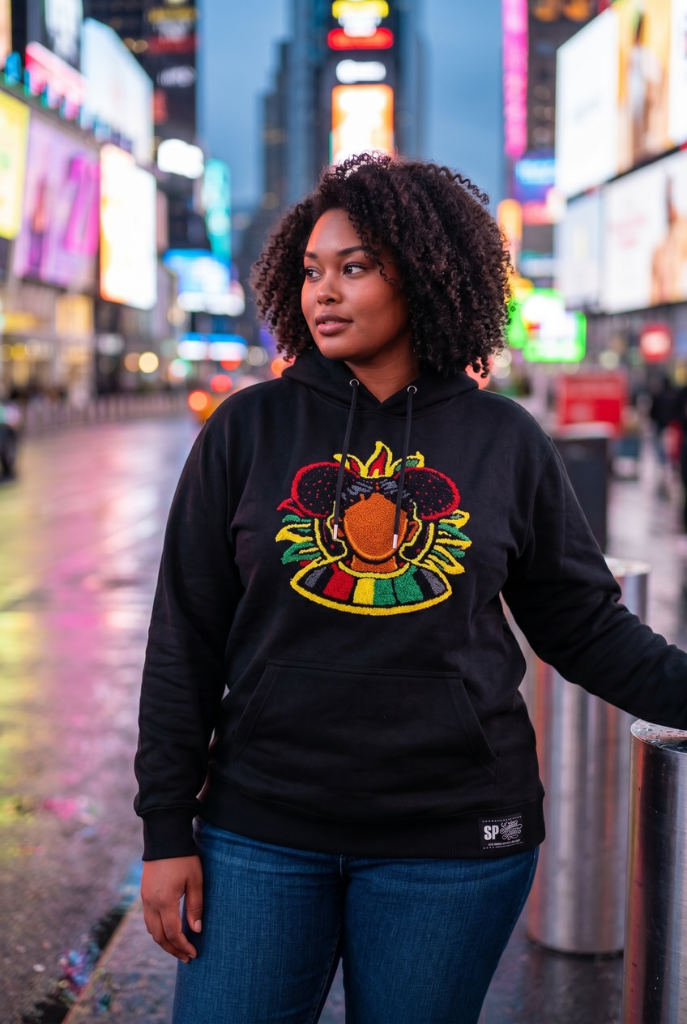
Our Renaissance Collection is rooted in that position. Premium apparel. Heritage-inspired design. Purposeful production.
The modern individual does not need disposable fashion built around an empty trend cycle. The modern individual needs objects with weight. Texture. Meaning. Longevity.
A garment will not replace legal advocacy. It will not rebuild a civil rights office. It will not end discriminatory policing or close the homeownership gap.
But culture shapes what people remember. What they recognize. What they refuse to surrender.
A hoodie can carry a symbol. An embroidered phrase can preserve a declaration. A collection can become a counter-narrative.
We Were Always Brilliant.
Not a slogan for approval.
A fact before the record acknowledged it. A fact after the record tries to erase it.

What we do now
Name the machinery.
Document the pattern. Support organizations that defend civil rights. Read the laws. Follow local policy. Protect historical memory. Build institutions that do not depend entirely on permission from the institutions being challenged.
Demand enforcement.
Demand transparency. Staffing. Monitoring. Remedy.
And choose what deserves to endure.
Heritage gives the present a longer horizon. Resistance gives it direction. Self-definition gives it form.
The rollback is real. So is the response.
Black America has survived systems designed to make its rights conditional. The work now is not to wait for recognition.
The work is to remain visible. Organized. Informed. Intentional.
Always brilliant. Still building. Never erased.